Calm Nights.
A simple 14-day plan to help your baby fall asleep on their own and sleep longer, built on methods tested in pediatric research.
You love bedtime. You don’t love what bedtime has become.
The 45-minute rock
Your baby only falls asleep in your arms, and wakes the moment you set them down.
The 2am, 3am, 4am
Night wakings every couple of hours, long after the newborn stage should have ended.
The bedtime battle
Crying, fighting sleep, and an evening that ends after 9pm for everyone.
Everything you need, nothing you don’t.
A 31-page illustrated guide. Read the core in one nap and start the same night. Reviewed September 2026.
Safe sleep, first
The AAP recommendations every method works inside.
The bedtime routine
A 5-step, 20–30 minute routine that becomes your baby’s sleep cue.
Three methods, your choice
Bedtime fading, timed check-ins, or the chair method, from gentlest to fastest.
The 14-day plan
Exactly what to do on each day, including naps.
The night-3 warning
Why things often get louder before they get better, and how to hold steady.
Checklists and a 30-day tracker
Parent checklists, daily sheets, progress graphs and a weekly review, ready to print.
What to do when…
18 real situations, from teething and sickness to travel, daylight saving, daycare and grandparents.
How families do it elsewhere
How sleep is handled in China, Japan, Germany, the Nordics and the UK, and how it compares with US guidance.
The research, cited
Every study referenced, with links, so you can check it yourself.
Two weeks, four stages.
Prepare
Check in with your pediatrician, pick one method, set up the room.
Start
Same routine, into the crib awake, same response every time.
Hold steady
Protest fades. Naps come next, using the same approach.
Lock it in
Tighten timing and let the log show you how far you’ve come.
Methods that have been tested, not guessed.
Calm Nights uses behavioral techniques studied in randomized trials published in Pediatrics.
Faster sleep, fewer wakings
In a randomized trial of 43 infants aged 6–16 months, timed check-ins and bedtime fading both reduced how long babies took to fall asleep, and check-ins reduced night wakings. At 12 months, researchers found no differences in emotional or behavioral problems or attachment.
Gradisar et al., Pediatrics, 2016 · doi.org/10.1542/peds.2015-1486No long-term harm found
A trial that followed 225 families to age six found no lasting negative effects of infant behavioral sleep techniques on children’s emotional health, stress, or the parent–child relationship.
Price et al., Pediatrics, 2012 · doi.org/10.1542/peds.2011-3467Safe sleep is built in
- Baby on their back, in their own sleep space
- Firm, flat crib or bassinet, nothing soft inside
- Room-sharing without bed-sharing
Sleep Around the World.
Short companion guides on how infant sleep is handled in other countries: official guidance, what research reports, and where it differs from US recommendations. Information only, not a recommendation to follow any practice.
 22 pages
China
National sleep-hygiene guidance, the 2023 clinical guideline, traditions like the confinement month, overheating, grandparents, travel tips and Mandarin phrases for elders.
$19 on its own · $9.50 when added at checkout
Buy China on its own →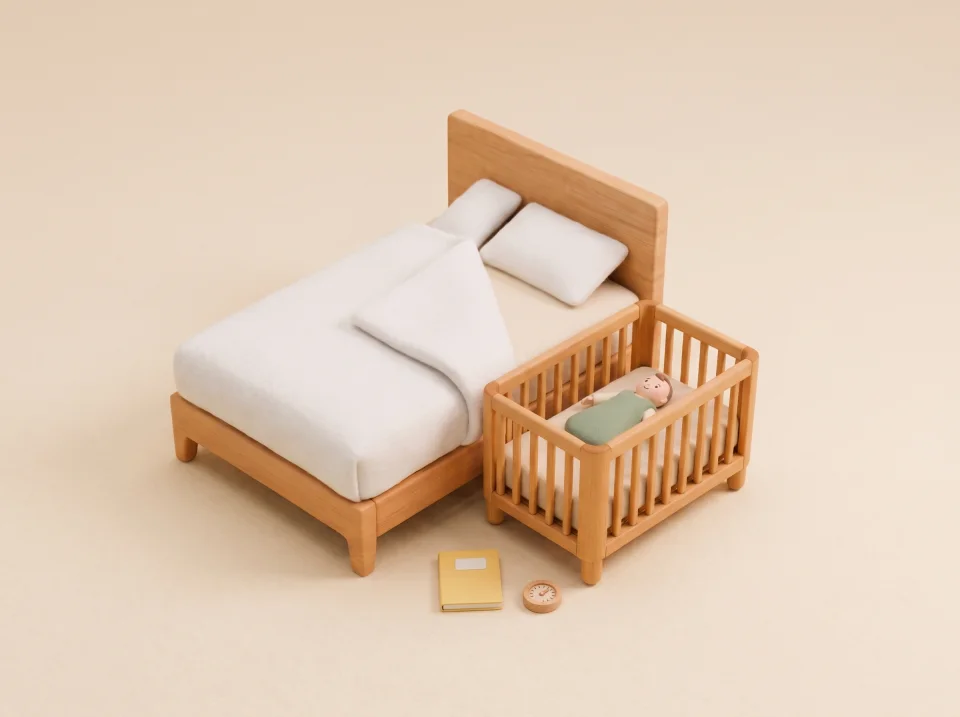 21 pages
Germany
The national SIDS guideline, the sleeping-bag rule, bedside sleepers, the healthcare system, Kita naps, and why German guidance waits until about 12 months for sleep training.
$19 on its own · $9.50 when added at checkout
Buy Germany on its own →Buying Calm Nights? Tick the add-ons on the checkout page to get them at 50% off.
Written by a BCBA.
Calm Nights was written by a NeuroPath co-founder, a Board Certified Behavior Analyst and parent. It uses the approach behavior analysts use every day: small, consistent steps, measured with data, and always kind.
What’s a BCBA? A Board Certified Behavior Analyst is a graduate-level professional certified by the Behavior Analyst Certification Board to apply behavior analysis, the science of how behavior is learned and how it changes. BCBAs design plans that build new skills and change habits using data, consistency and positive approaches. A BCBA is not a physician, so medical questions about your child belong with your pediatrician.
Before you buy.
What age is this for?
Healthy babies roughly 6–18 months old. For younger babies or specific concerns, talk with your pediatrician first.
Will my baby cry?
Some protest is normal with any change. If you want the least crying, start with bedtime fading, the gentlest method in the guide.
What about night feeds?
Ask your pediatrician whether your baby still needs them. The plan shows you how to keep a needed feed without it becoming the only way back to sleep.
How do I get it?
Right after checkout you land on a download page, and a copy is emailed to you too. No account or sign-in. Print the checklists and 30-day tracker, or fill them in on your phone.
How can I pay?
Checkout is handled securely by Stripe. Major cards, Apple Pay, Google Pay and Link are accepted, plus other local methods depending on your country.
Is it up to date?
Yes. The guide was reviewed in September 2026 against the American Academy of Pediatrics safe-sleep recommendations and recent research, and cites every source.
Is this medical advice?
No. It’s educational information on behavioral sleep techniques. It doesn’t replace your pediatrician, and you should pause the plan whenever your baby is sick. See the terms.
Start your first calm night.
Read it during the next nap. Start tonight.
Get Calm Nights · $39